
An Irrigation System Is Only Efficient When the Water Reaches the Plants
Drip irrigation is one of the most efficient ways to water a desert landscape. It delivers water slowly and directly into the soil, reducing the evaporation, runoff, and overspray associated with other watering methods.
However, installing a drip system does not guarantee that every plant is receiving the correct amount of water. Emitters can become restricted, tubing can split, connections can loosen, filters can collect debris, and irrigation settings can remain unchanged while the weather and plants’ needs change.
Because most drip components operate close to the ground—and are often covered by gravel, mulch, or plant growth—a problem may remain unnoticed until a plant begins showing significant stress.
Frequent checks help identify these problems before they become dying plants, wasted water, saturated soil, or expensive repairs.
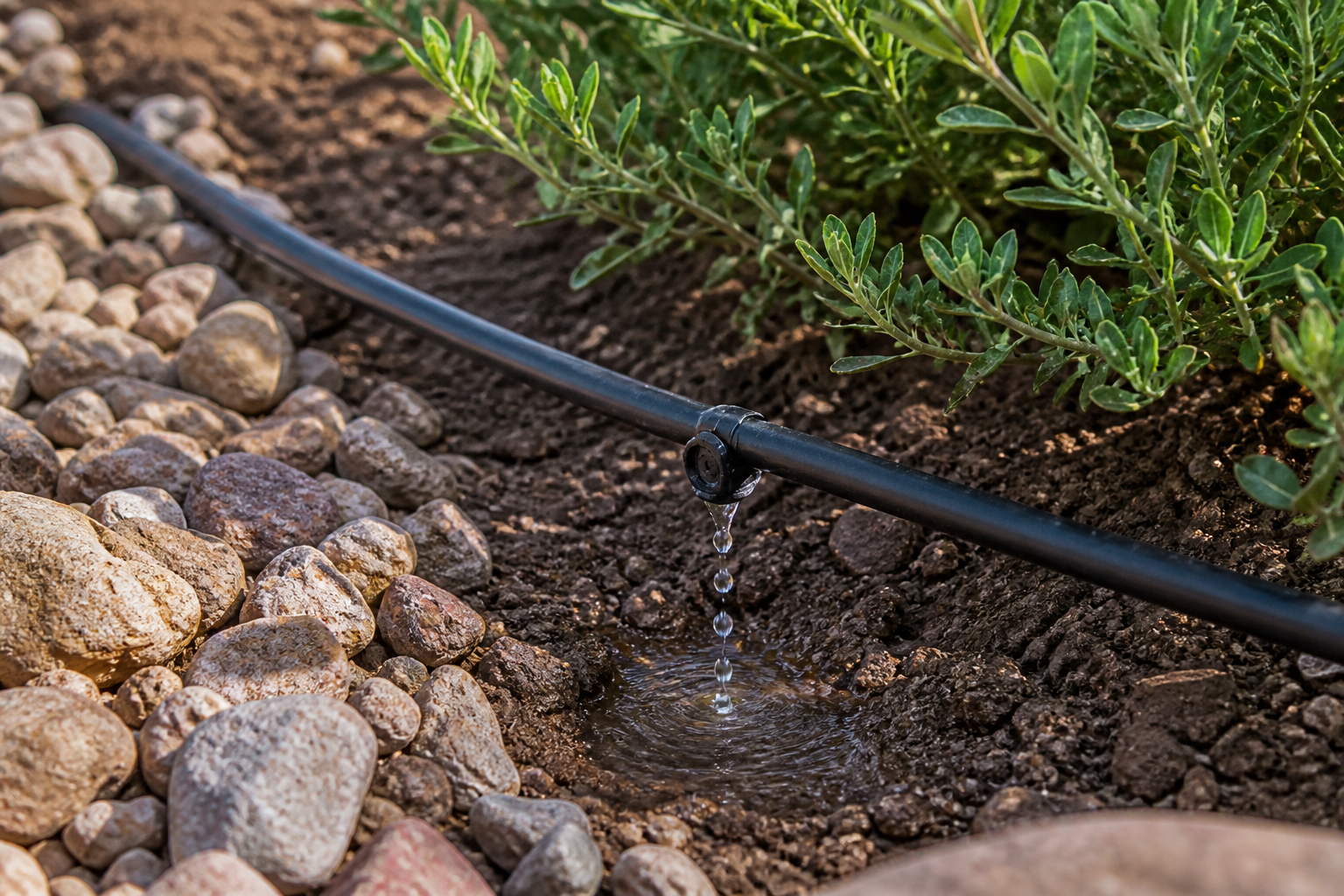
Frequent Checks Do Not Mean Frequent Watering
It is important to distinguish between checking an irrigation system frequently and watering a landscape too frequently.
Desert trees and shrubs generally benefit from water that penetrates deeply enough to reach their active root zones. Shallow, overly frequent watering can encourage roots to remain near the surface and may keep some soils continuously wet.
The goal of an irrigation check is not to add unnecessary watering days. It is to confirm that the system operates correctly when it does run and that each plant receives an appropriate amount of water for its size, species, location, soil, and current weather conditions.
A system can run on schedule and still fail to water the landscape properly.
Why Drip Emitters Become Restricted
Drip emitters contain very small openings designed to release water at a controlled rate. Those small passages also make emitters vulnerable to clogging and restricted flow.
Common causes include:
- Mineral deposits from hard water
- Fine soil and sediment entering an open line
- Debris collected in the system’s filter
- Algae or other biological material
- Kinked or pinched tubing
- Roots growing near or into an emitter
- Aging components that no longer deliver their intended flow
An emitter does not always stop working completely. Mineral accumulation may gradually reduce its output, causing one plant to receive less water than the other plants on the same irrigation zone.
From a distance, everything may appear normal because the valve activates and some emitters continue flowing. A closer inspection is often the only way to find the restricted emitter.
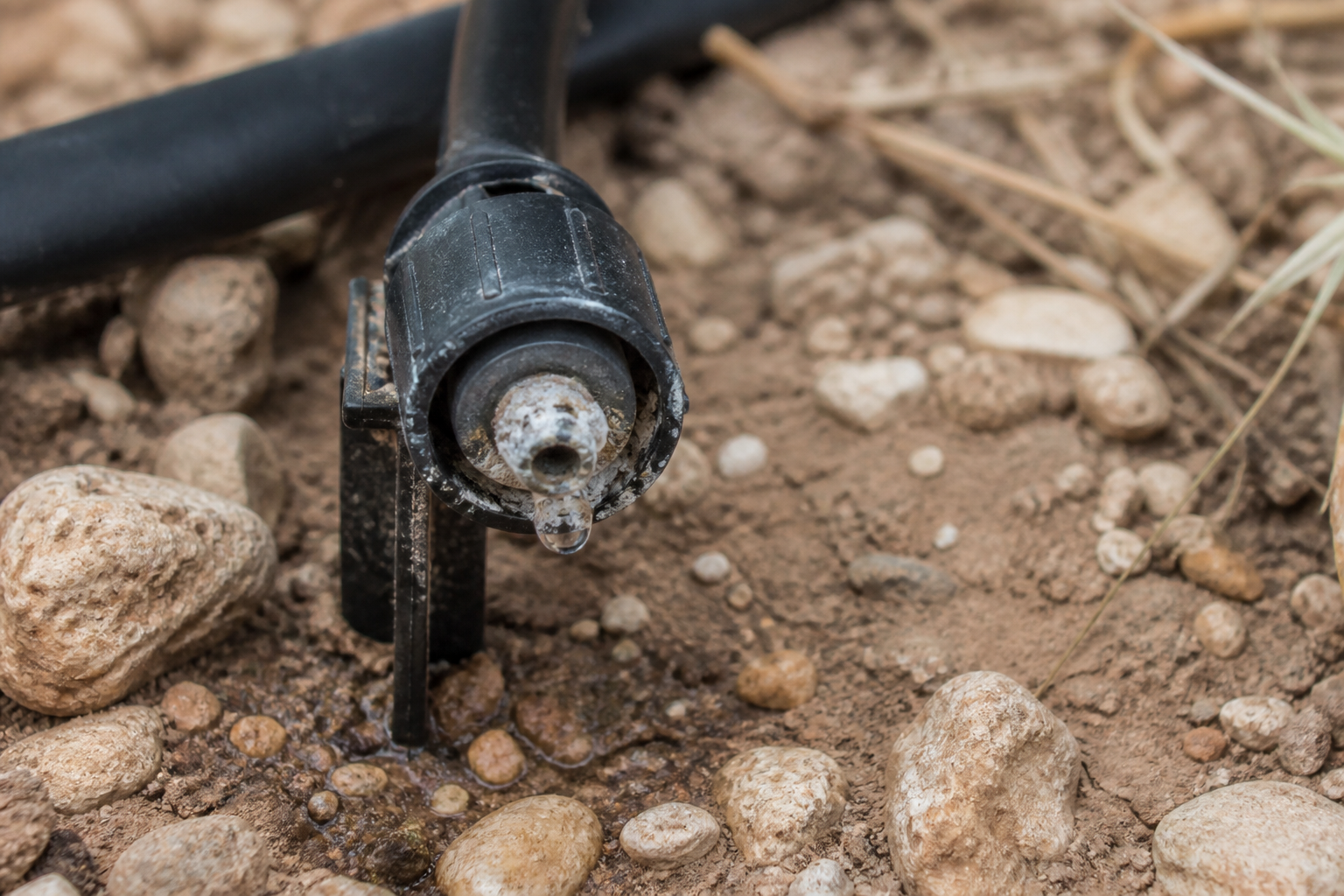
Mineral Buildup Is Common in Valley Irrigation Systems
Water in many Arizona communities contains dissolved minerals. As water repeatedly moves through an irrigation system and evaporates around its outlets, mineral deposits can accumulate on emitters, fittings, sprinkler nozzles, and other components.
This hard, crusty buildup is commonly described as calcium or calcification, although the deposits may contain calcium carbonate and other mineral salts.
A partially restricted emitter may still drip, but not at its intended rate. One plant may receive adequate water while another plant only a few feet away becomes progressively drier.
That difference matters during a Surprise summer. A plant with an underperforming emitter may not immediately look damaged, but repeated under-watering can contribute to wilting, leaf loss, canopy thinning, scorched foliage, poor flowering, and eventual decline.
What Decalcifying an Emitter Can Accomplish
When mineral buildup is limited to a removable emitter or nozzle, cleaning the component may help restore its flow. Depending on the type and condition of the component, this may involve removing it and soaking it in vinegar to help dissolve mineral deposits.
Emitters should not be aggressively enlarged with wire, nails, drill bits, or other metal objects. Enlarging the opening can permanently change its flow rate and cause the plant to receive too much water.
Some emitters are inexpensive enough that replacement is more practical than cleaning. If mineral buildup or debris is occurring throughout an entire zone, cleaning one visible emitter will not solve the underlying system problem. The filter, pressure regulator, irrigation lines, and other emitters may also need inspection.
Large-scale chemical treatment of an irrigation system is different from cleaning an individual removable component. Acids and other system treatments require the correct equipment, concentration, safety procedures, and manufacturer guidance. They should not be handled as an informal landscape-maintenance task.
Why a Quick Walk-Through Can Make a Real Difference
A visual irrigation check does not always require a major repair project. Simply operating a zone and walking the property can reveal problems that would otherwise remain hidden.
During a check, we may notice:
- An emitter with little or no visible flow
- Mineral crust forming around an outlet
- A disconnected tube spraying water
- A cracked line creating a puddle
- Water escaping into gravel instead of reaching the root zone
- An emitter buried under soil or blocked by debris
- A tube pinched beneath a rock or landscape feature
- Water being delivered too close to an established tree trunk
- A young or newly installed plant without adequate coverage
- An emitter that should be repositioned as a plant grows
- Soil that remains saturated long after irrigation
- Soil that is still dry beneath an emitter after the system runs
Correcting a small problem during a recurring visit can improve water delivery immediately. It can also prevent weeks of unnoticed stress or water waste.
Arizona Weather Does Not Follow One Permanent Irrigation Schedule
Surprise and the Phoenix West Valley experience major changes in temperature and plant water demand throughout the year.
A schedule appropriate during extreme summer heat will usually provide far too much water during the cooler part of the year. Likewise, a conservative winter schedule may not meet plant needs when temperatures rise rapidly in late spring.
The Valley can also move quickly between conditions:
- Mild spring weather and sudden early heat
- Extended periods above 100 degrees
- Dry wind that increases moisture loss
- Monsoon humidity and localized rainfall
- Warm autumn afternoons followed by cooler nights
- Winter cold snaps and occasional frost
- Unusually warm periods during months that are normally cooler
This is why an irrigation controller should not be programmed once and ignored for the rest of the year.
Weather Adjustments Should Be Thoughtful
Controller changes should reflect broader seasonal conditions, recent rainfall, soil moisture, plant response, and the amount of water the system actually delivers—not every small movement in the daily forecast. Cooler conditions generally call for less frequent watering; rising heat may shorten the interval between watering days.
Before increasing a schedule to correct visible plant stress, check the emitters. Adding time to a zone with clogged emitters may overwater the functioning areas without helping the dry plants.
Rain Does Not Always Replace a Scheduled Irrigation
Monsoon storms can produce heavy rain in one neighborhood and leave another nearby property almost dry. Even when rainfall looks substantial, dense plant canopies, walls, roof overhangs, and compacted soil can affect how much water reaches the root zone.
An irrigation decision should be based on actual conditions at the property rather than the assumption that rain fell equally throughout the area.
When rainfall sufficiently wets the root zone, skipping or delaying irrigation can conserve water and reduce the risk of saturated soil. When rain only dampens the surface, deeper-rooted plants may still need their regularly scheduled irrigation.
Irrigation Problems Can Be Mistaken for Plant Problems
Yellowing leaves, wilting, leaf drop, dead branches, and poor growth can have several causes. Homeowners may assume a struggling plant needs more water, fertilizer, or replacement when the actual issue is a clogged emitter or broken line.
The opposite can also occur. A leaking line or excessive controller schedule may keep soil too wet, reduce oxygen around the roots, and produce symptoms that resemble drought stress.
Before increasing watering, it is important to determine:
- Whether the emitter is functioning
- How much water it delivers
- Where that water is landing
- How deeply the moisture penetrates
- How long the soil remains wet
- Whether the plant shares a zone with plants that have different needs
The condition of the soil can tell us more than the appearance of the surface alone.
Soil Conditions Affect How Water Should Be Applied
Not every Surprise property absorbs and holds water in the same way. Sandy soil accepts water quickly but may dry sooner. Clay-heavy or compacted soil may absorb water slowly, increasing puddling or runoff, while caliche can restrict drainage and roots. Two properties with similar plants may therefore require different watering strategies.
Emitter Placement Must Change as Plants Grow
A small plant may initially receive water from an emitter placed close to its base. As the plant matures, its active roots expand outward.
Leaving all irrigation directly against the trunk or central stem does not encourage water to reach the broader root zone. Established trees and large shrubs may need emitters repositioned or additional emitters installed farther from the trunk as their canopies and root systems expand.
Frequent checks help identify plants that have outgrown their original irrigation layout.
Small Leaks Can Create Large Problems
A disconnected quarter-inch tube can release far more water than a properly functioning low-flow emitter. Because the water may disappear into gravel or a low area, the leak is not always obvious when the system operates early in the morning.
Over time, a leak can:
- Waste a significant amount of water
- Wash soil away from roots
- Create persistently saturated areas
- Encourage weeds
- Attract roots toward the leaking location
- Reduce pressure or flow elsewhere in the zone
- Damage nearby hardscape or structures
Catching the problem during a routine visit is much better than discovering it through an unusually high water bill or a declining plant.
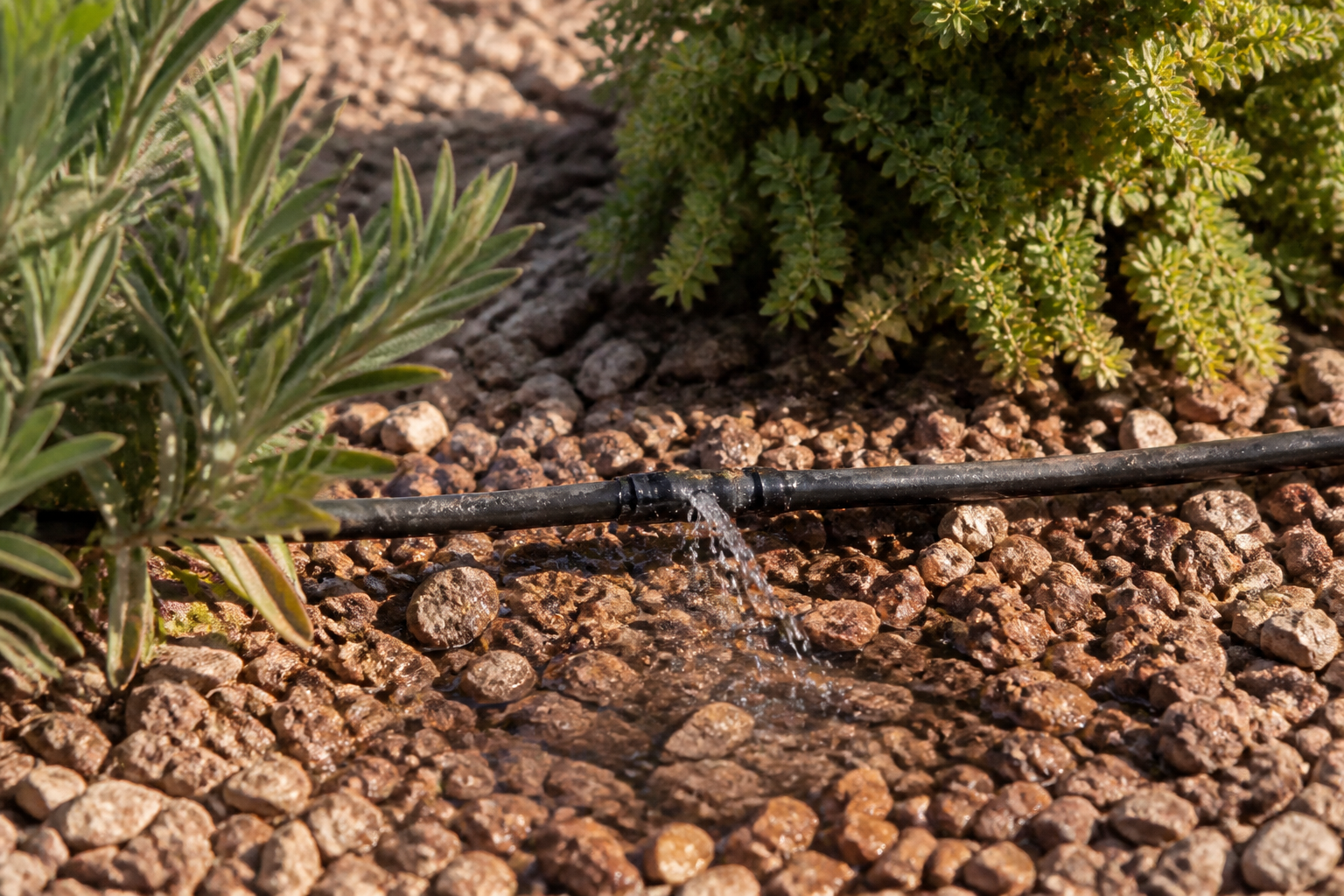
What We Watch During Recurring Landscape Maintenance
Arrowscape’s recurring maintenance is designed around care for the full property. When irrigation monitoring is included in the selected service plan, we watch for visible conditions that may affect plant health and water delivery.
These can include:
- Obvious leaks and disconnected drip lines
- Restricted or nonfunctioning emitters
- Visible mineral buildup
- Tubing damaged by age, animals, tools, or sun exposure
- Emitters that are no longer positioned appropriately
- Unexpectedly dry or saturated soil
- Plants showing signs of possible water stress
- Controller settings that may need seasonal attention
- Irrigation components obstructed by plant growth or debris
A visual irrigation watch is valuable, but it is not the same as a complete irrigation audit, system redesign, underground leak detection, or guaranteed diagnosis of every plant-health problem. When we see something that requires more extensive testing or repair, we can explain what we observed and recommend the appropriate next step.
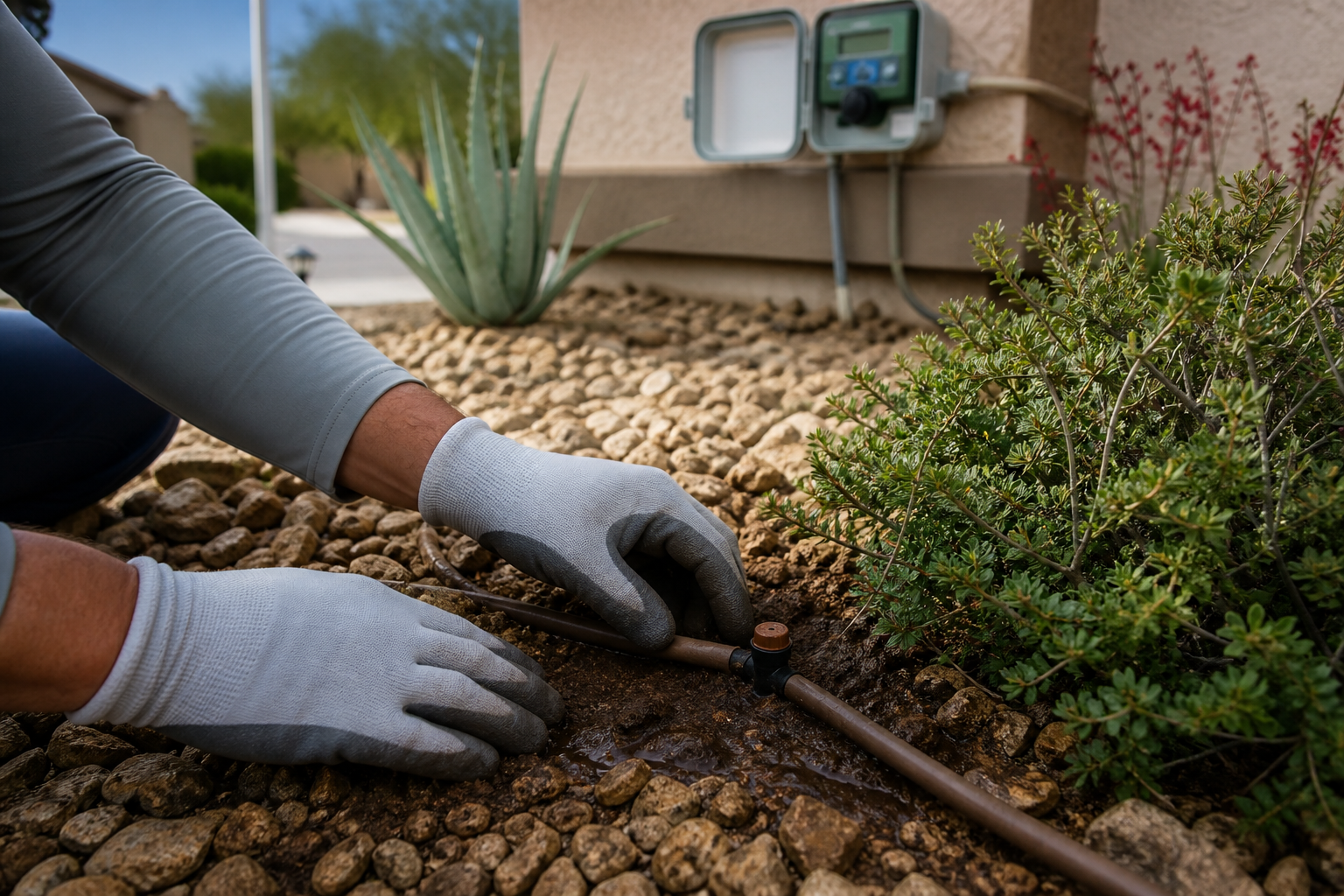
Why Recurring Checks Are Better Than Waiting for a Failure
Drip systems usually do not announce that they are beginning to fail. A restriction may develop slowly. A small crack may worsen over time. An emitter can be moved during another landscape task. A controller can retain an outdated seasonal schedule for months.
Recurring visits create repeated opportunities to identify these changes.
A timely correction may prevent:
- A stressed or lost plant
- Weeks of wasted water
- Uneven growth across the property
- Mineral buildup from becoming more severe
- A small leak from damaging the surrounding area
- Overwatering caused by an unnecessary schedule increase
- A minor repair from becoming a larger irrigation project
Better Irrigation Supports Better Plant and Soil Health
Healthy desert landscaping depends on water reaching the intended root zone at the right rate—not simply on whether the controller runs. Regular checks make it easier to catch restricted emitters, leaks, damaged tubing, poor placement, and outdated seasonal settings before they harm the property.
Request Recurring Landscape Maintenance
Looking for recurring landscape care that considers more than what can be cut and blown during a visit? Arrowscape Lawn Care Services provides owner-operated recurring property maintenance for homeowners in Surprise, Arizona, and nearby West Valley communities.
Explore our recurring-maintenance options or request service to find out whether your property fits our current routes.
Visible irrigation monitoring is included only where stated in the selected maintenance plan; it is not a complete irrigation audit or leak-location guarantee. Standalone irrigation service begins with an $85 service and diagnostic fee. That fee is waived when Arrowscape completes the resulting repair. The visit includes a system diagnostic and help locating a suspected leak, but the exact leak location cannot be guaranteed.