
Quick Answer
Artificial turf can develop a strong pet odor when urine, pet hair, dust, and organic debris collect between the turf blades, within the infill, and around the backing beneath the visible surface.
Arizona’s summer heat does not create the contamination, but it can make existing odors much more noticeable. A quick hose rinse may dilute recent urine and help with light maintenance, but it may not remove material trapped deeper in the turf system.
Persistent odor usually requires cleaning the affected turf system—not simply spraying fragrance across the surface.
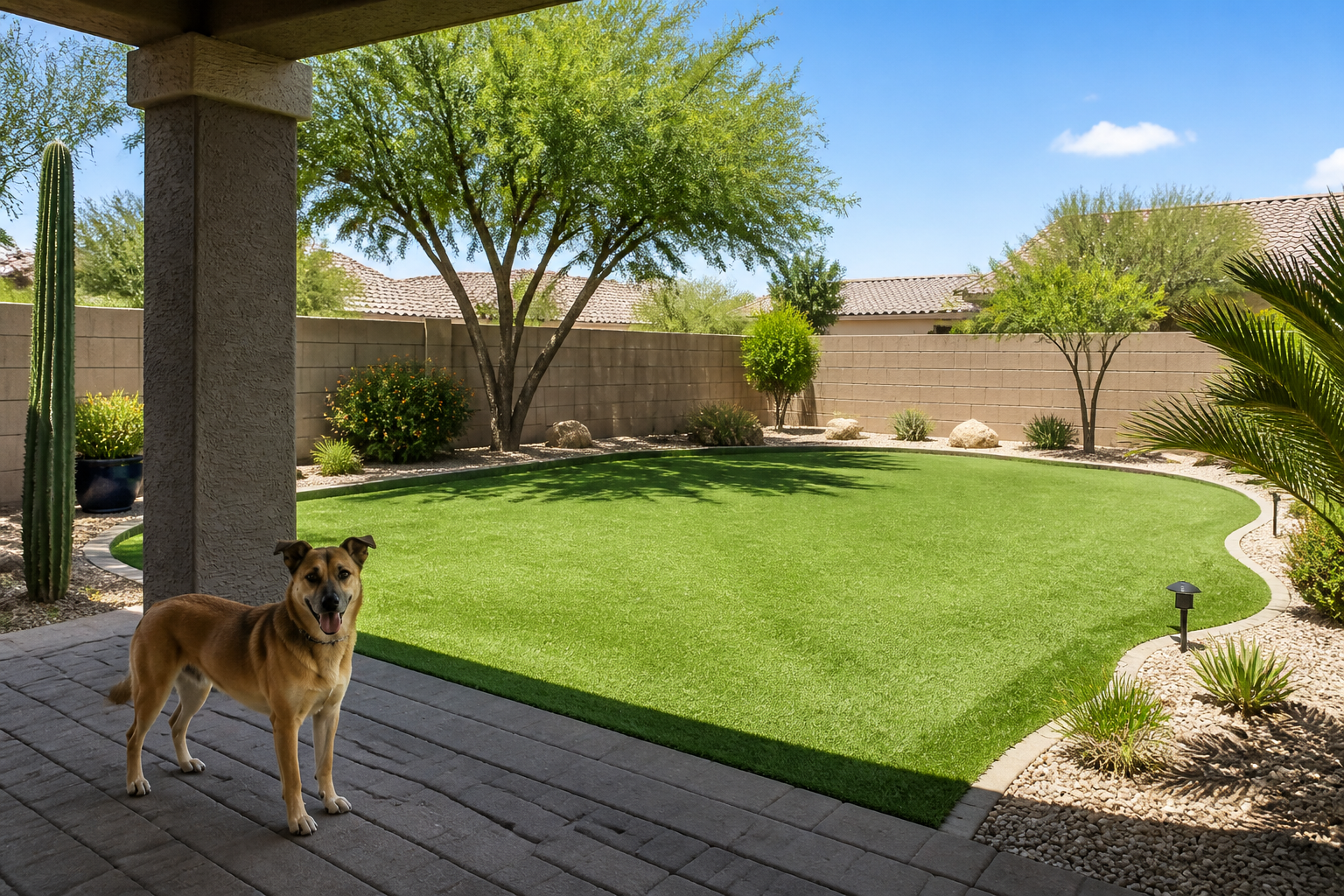
Artificial Turf Is Low Maintenance, Not No Maintenance
Artificial turf does not need mowing, fertilizing, or the same irrigation schedule as natural grass. That makes it a convenient option for many Surprise and West Valley homeowners.
However, artificial turf still collects:
- Dust and windblown soil
- Leaves and plant debris
- Pet hair
- Solid pet-waste residue
- Urine deposits
- Spilled food and drinks
- Material carried onto the turf by shoes and paws
- Infill that has shifted or become compacted
A yard may continue looking green even when material is accumulating below the tops of the turf blades. Appearance alone does not tell you whether the turf is clean.
Why Pet Odor Becomes More Noticeable During Arizona Summers
Surprise regularly experiences extended periods of intense sunlight and temperatures above 100 degrees. Artificial turf exposed to direct sun can become considerably hotter than the surrounding air.
As the turf, infill, and underlying materials heat up, odors from previously deposited pet waste can become more noticeable. Homeowners may think a new problem suddenly developed when warmer weather is revealing buildup that accumulated during cooler months.
This is why turf that seemed acceptable during winter or early spring may begin smelling strongly when summer arrives.
Heat can also cause rinse water to evaporate quickly from the visible surface. The turf may look dry while moisture and odor-causing residue remain deeper within the infill or around poorly draining areas.
Where Pet Urine Goes
Pet urine does not necessarily remain on top of the turf blades.
In a properly installed system, liquid should move through:
- The turf blades
- The infill between the blades
- The turf backing and its drainage openings
- The prepared base underneath
- The surrounding drainage area
That movement is one reason installation quality matters.
If drainage is working correctly, water can help carry diluted waste through the system. If drainage is slow, uneven, or obstructed, liquid may remain in the turf, infill, backing, or base longer than intended.
The odor may therefore be coming from more than the visible turf fibers.
Why Rinsing With a Hose May Not Be Enough
Regular rinsing is useful. It can dilute fresh urine, remove loose surface material, and reduce the amount of waste allowed to accumulate.
The limitation is that water follows the easiest available path.
A quick surface rinse may:
- Wet only part of the affected area
- Move urine into nearby infill instead of fully flushing it
- Leave compacted material undisturbed
- Miss concentrated pet-use areas
- Temporarily reduce odor without addressing its source
- Drain poorly where the base or backing has a problem
If a homeowner repeatedly rinses the yard but the odor returns after the turf dries or heats up, the affected area likely needs more than additional water.
Adding excessive rinse water without checking drainage may also create a different problem. Water can collect in low spots or remain around areas that are not draining properly.
The Role of Infill
Infill is the loose material distributed between artificial-turf blades. Depending on the installation, it may help support the fibers, provide weight and stability, improve the surface feel, or contribute to the system’s intended performance.
Over time, infill can shift, settle, and become compacted—especially in pet paths, play areas, and other high-traffic locations.
Compacted infill can hold pet hair, dust, small debris, and residue. It can also make it harder to clean the turf evenly.
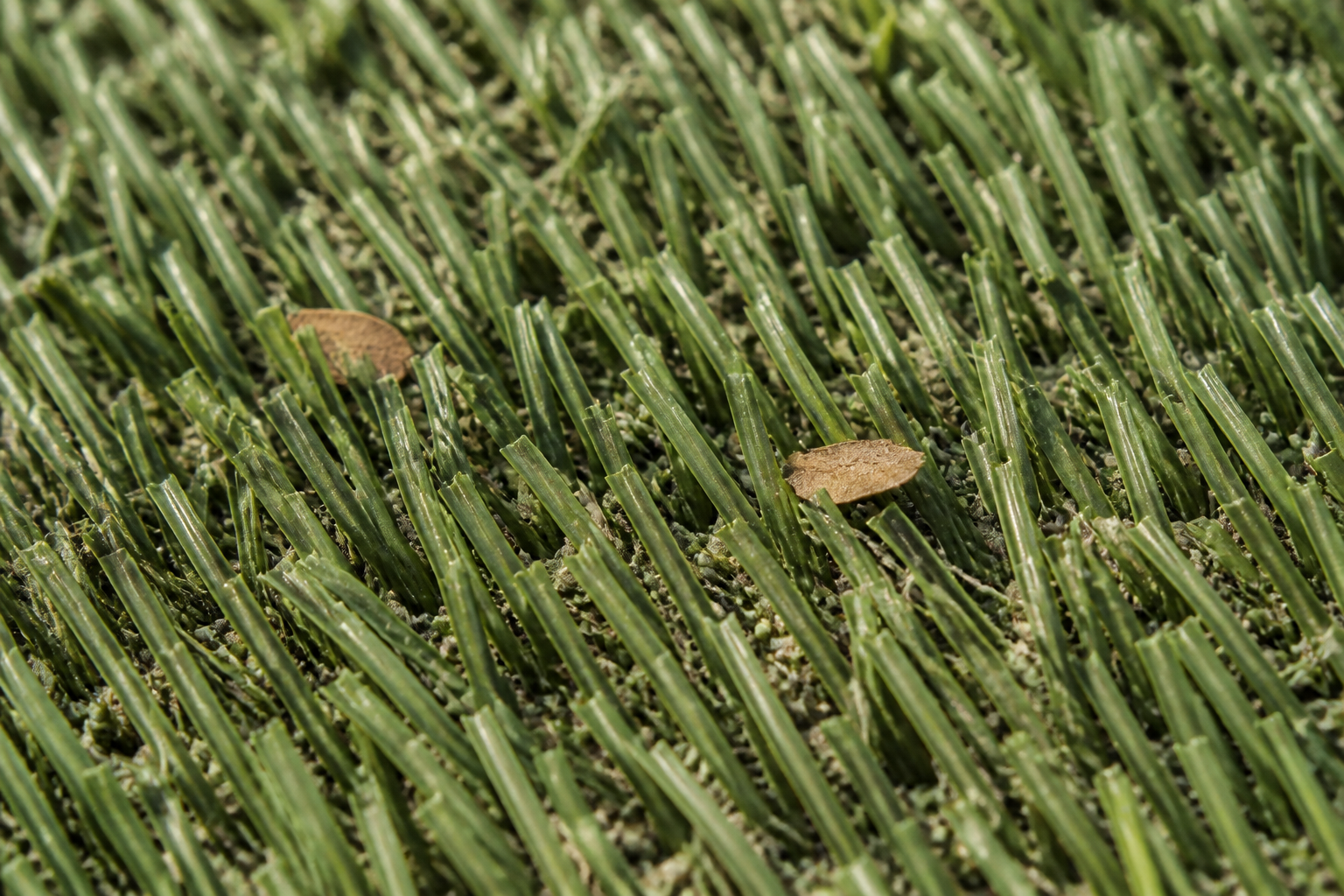
Professional grooming and decompaction help loosen these areas, lift flattened turf fibers, and improve access to the material below the visible surface.
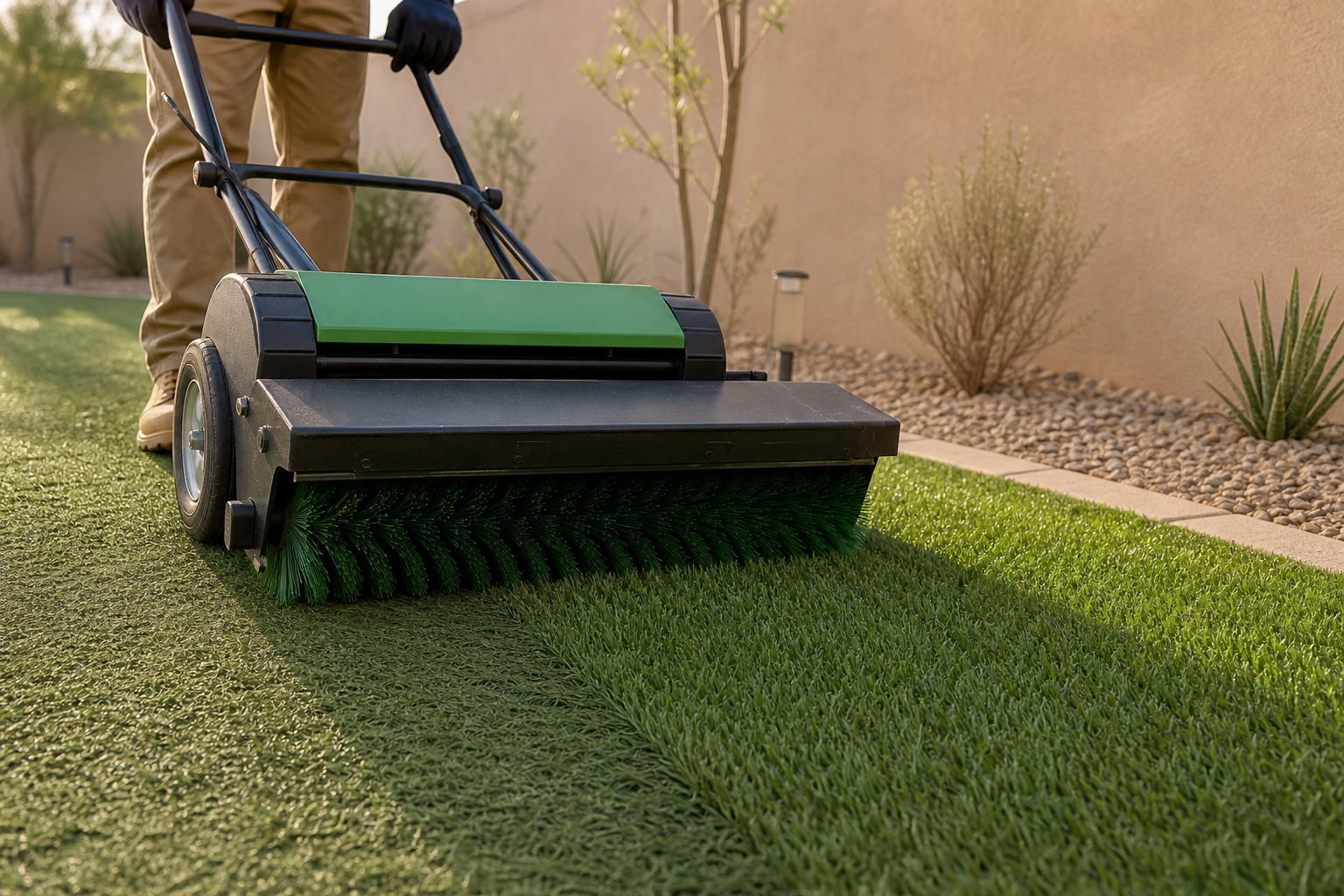
Infill condition should be evaluated rather than automatically adding more. Additional infill does not correct every odor or drainage problem, and the appropriate material depends on the existing turf system.
Drainage Has a Major Effect on Odor
Artificial turf depends on more than the green surface. The backing, base preparation, slope, drainage route, and surrounding hardscape all affect where liquid goes.
Warning signs of a drainage problem can include:
- Water remaining on the surface
- Certain areas staying wet much longer than others
- Odor concentrated in one low spot
- Water collecting along walls or curbing
- Turf that smells again immediately after drying
- Soft or uneven areas beneath the turf
- Odor that persists despite repeated cleaning
Cleaning can improve turf affected by pet use and surface buildup, but it cannot correct every installation or drainage defect.
If the underlying base does not drain properly, odor may continue returning until the drainage problem is addressed.
Pet Hair and Debris Matter Too
Pet odor is not always caused by urine alone.
Hair, leaves, dust, and small pieces of organic material can settle between the turf blades. When those materials combine with moisture and pet waste, they make the surface harder to rinse and can contribute to an unpleasant yard.
Removing loose debris before applying a cleaning or odor-control treatment allows the treatment and rinse water to reach the turf more evenly.
That is why a complete cleaning begins with inspection and debris removal rather than immediately spraying deodorizer.
Fragrance Is Not the Same as Cleaning
A heavily scented product may make the yard smell better temporarily, but fragrance does not prove that the affected material has been removed or treated.
An effective odor-focused service should address the areas where pets repeatedly urinate and where residue has accumulated. Depending on the turf’s condition, this may include:
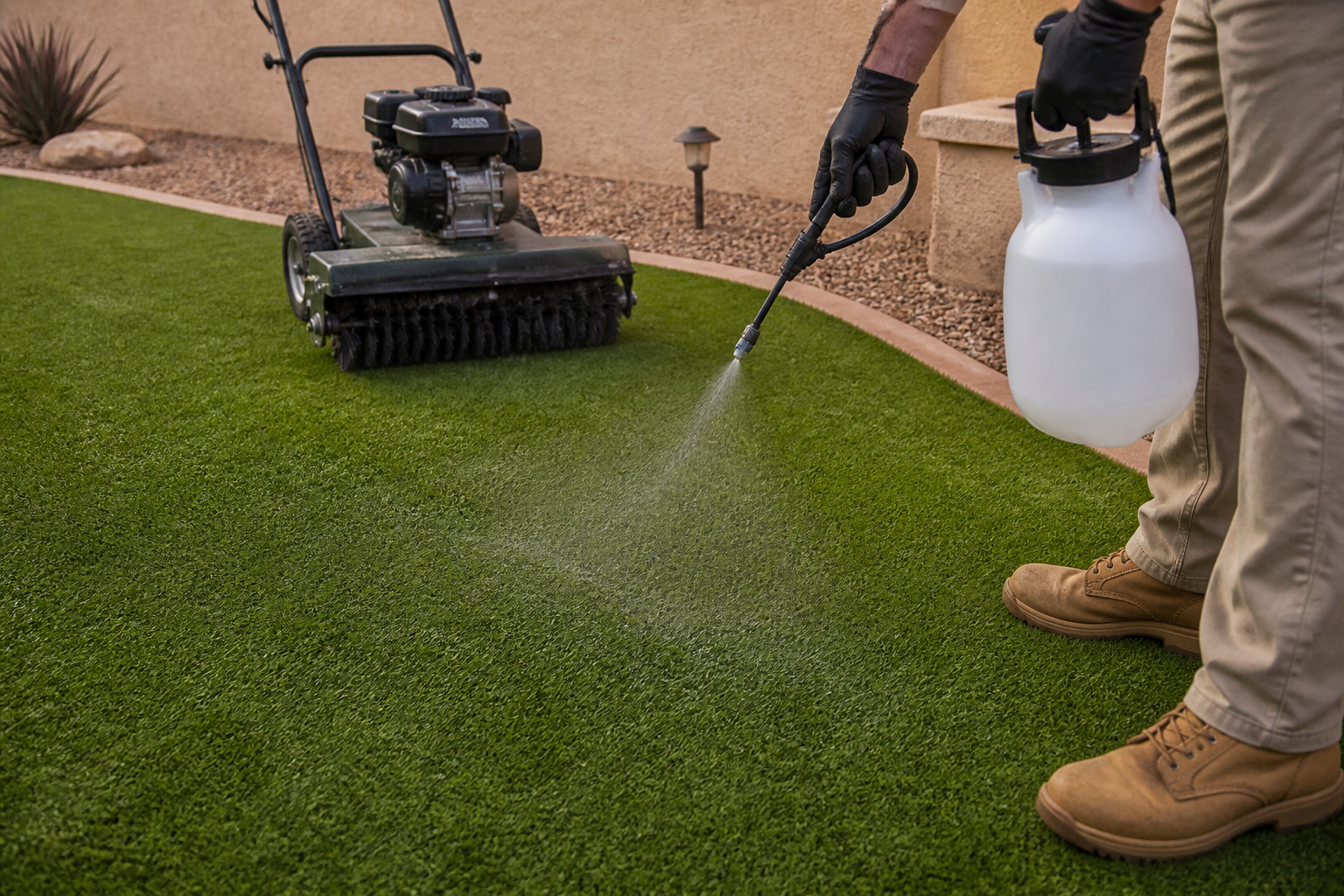
- Removing surface debris and pet hair
- Identifying concentrated pet-use areas
- Loosening compacted infill
- Applying an appropriate pet-safe odor-control treatment
- Working the treatment into the affected area
- Rinsing and flushing sections as conditions allow
- Grooming the turf fibers
- Redistributing or adding appropriate infill when needed
The exact approach should reflect the turf’s age, backing, infill, drainage, condition, and level of pet use.
What Homeowners Can Do Between Professional Cleanings
Regular attention can keep a small pet-odor issue from becoming a major buildup.
Remove solid waste promptly
Pick up solid pet waste as soon as practical. If residue remains, use a turf-compatible method to remove it and rinse the affected location.
Do not force solid waste deeper between the turf blades.
Rinse frequent pet-use areas
If your dog repeatedly uses the same portion of the yard, focus routine rinsing on that entire area rather than applying a few seconds of water to one visible spot.
Make sure the water is draining instead of collecting.
Remove pet hair and loose debris
Use turf-compatible equipment to remove hair, leaves, and loose surface material. Avoid metal tools or aggressive equipment that could cut, pull, or damage the turf fibers.
Watch for low or slow-draining areas
Pay attention to areas that stay wet, feel soft, or smell worse than the rest of the yard. A concentrated problem may point to drainage, infill, or base conditions that routine surface rinsing cannot correct.
Use products intended for artificial turf
Do not assume that any household cleaner is appropriate for synthetic grass. Harsh chemicals may discolor or damage fibers, affect adhesives, leave residue, create pet-safety concerns, or conflict with the turf manufacturer’s care instructions.
Follow the turf manufacturer’s guidance and the product label.
Avoid cleaning extremely hot turf
Schedule routine cleaning during a cooler part of the day. This is safer for the person doing the work, safer for pets, and gives an applied product more time to contact the affected area before drying.
Signs Your Turf May Need a Professional Cleaning
Consider a professional turf cleaning or odor-focused reset when:
- Pet odor returns shortly after rinsing
- The smell becomes much stronger during hot weather
- Multiple dogs regularly use the turf
- Pet hair and debris are embedded between the blades
- Infill appears compacted or uneven
- Turf fibers look flattened and tired
- Certain areas smell substantially worse than the rest
- The yard has not received a detailed cleaning for an extended period
- You recently moved into a home with turf used by previous pets
- Routine homeowner maintenance is no longer producing an acceptable result
The longer waste and debris are allowed to build up, the more involved the cleaning may become.
What Professional Turf Cleaning Can and Cannot Do
A professional turf-cleaning service can improve the turf’s appearance, remove surface debris and pet hair, lift flattened fibers, loosen compacted areas, and provide targeted odor-control treatment.
However, no responsible service should assume that every odor problem has the same cause.
Results can be affected by:
- The severity and age of the buildup
- The number and size of pets
- How frequently the pets use the turf
- Turf and backing condition
- The type and condition of the infill
- Drainage performance
- The condition of the underlying base
- Continued pet use after cleaning
A turf cleaning can provide a meaningful refresh or reset, but damaged backing, failed seams, poor drainage, or an improperly constructed base may require repair or evaluation by a qualified turf installer.
Standard Turf Refresh Versus a Deeper Reset
Arrowscape offers two levels of artificial-turf cleaning based on the yard’s condition.
Standard Turf Refresh
A Standard Turf Refresh is intended for turf that looks dusty, flat, or lightly used by pets.
The service can include:
- Turf and infill condition check
- Surface debris and pet-hair removal
- Power-broom grooming
- Pet-safe odor-control treatment
- Deep rinse and final grooming
- Light infill redistribution where needed
Deep Turf Reset
A Deep Turf Reset is designed for stronger lingering odor, multiple pets, compacted infill, flattened areas, or heavier use.
It includes the Standard Turf Refresh services along with additional attention such as:
- Odor-focused pretreatment
- Targeted treatment of concentrated urine-odor areas
- Infill decompaction
- A deeper rinse and flush of affected sections
- Odor-control infill where appropriate
- Additional grooming and leveling
The recommended service depends on the turf’s size, condition, pet use, odor concentration, drainage, access, and infill needs.
Artificial Turf Still Needs a Maintenance Plan
Artificial turf may require less routine work than natural grass, but pet turf is not maintenance-free. Prompt waste removal, targeted rinsing, debris control, drainage observation, grooming, and periodic detailed cleaning can keep odor from making the yard unpleasant to use. It is easier to address buildup before the first extreme heat reveals months of accumulated residue.
Request Artificial-Turf Cleaning in Surprise, Arizona
Arrowscape Lawn Care Services provides artificial-turf cleaning, grooming, and pet-odor treatment for homeowners in Surprise and nearby West Valley communities.
Whether your yard needs a routine refresh or a deeper odor-focused reset, we will review the turf’s size, condition, pet use, problem areas, and access before confirming the recommended service and final price.
Explore artificial-turf cleaning or request service to find out which level fits your property.